

How Optical Components Improve Performance in Aerospace & Defense Sensing Systems
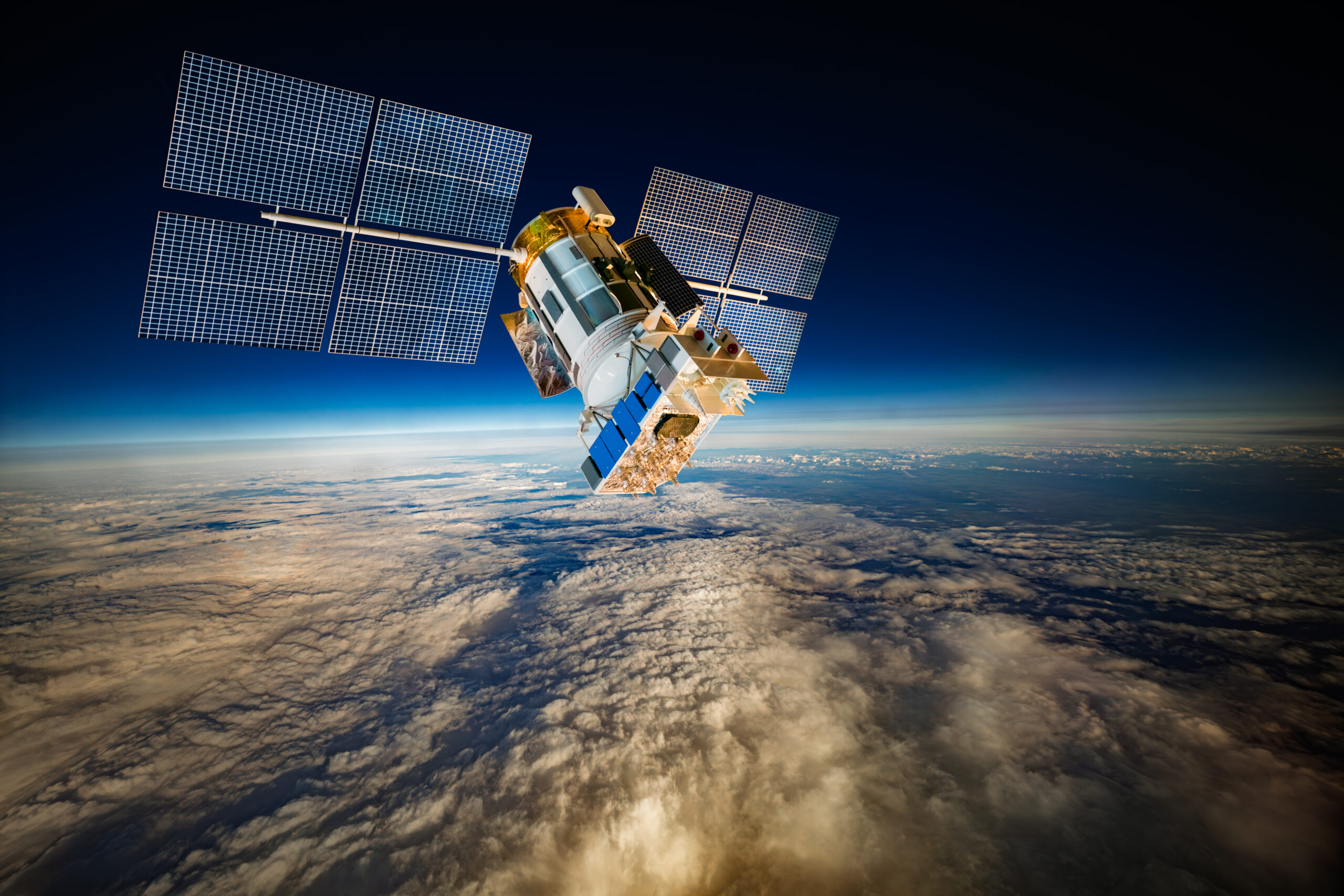
How Optical Components Improve Performance in Aerospace & Defense Sensing Systems
Aerospace and defense sensing systems operate in some of the most demanding environments on Earth and beyond it. From low Earth orbit satellites monitoring solar EUV emissions to airborne IR detection platforms flying at altitude, every optical component in the signal chain is subjected to extreme temperatures, ionizing radiation, mechanical vibration, and vacuum conditions that standard commercial optics simply cannot survive.
Designing reliable optical systems for these platforms is not a matter of choosing the highest-sensitivity detector available. It requires a deliberate engineering approach that optimizes the entire optical signal chain from the window and filter at the front end to the photodetector at the back against the real world constraints of the mission profile.
This article breaks down the key design decisions that engineers face when specifying optical components for aerospace and defense sensing applications, with particular focus on satellite instruments and space-based platforms where Opto Diode’s AXUV series photodiodes are deployed.
Material Selection: Transmission, Durability, and Weight
The substrate material chosen for optical windows and filters is one of the earliest and most consequential decisions in any aerospace optical design. Materials commonly used in commercial or laboratory sensing systems are often disqualified for space or airborne platforms due to outgassing behavior, radiation susceptibility, or insufficient transmission at the target wavelength.
Here’s how the most common aerospace grade optical materials compare:
|
Material |
Spectral Range |
Key Strengths |
Considerations |
|
Fused Silica |
UV – NIR |
Low outgassing, radiation-hard, mechanically robust |
Heavier than some alternatives |
|
Sapphire |
UV – MIR |
Extremely hard, scratch-resistant, broad transmission |
Higher density; weight consideration |
|
Silicon |
NIR – MIR |
Good IR transmission, effective visible rejection |
Opaque in visible; limited to IR applications |
|
Calcium Fluoride (CaF₂) |
DUV – MIR |
Very broad transmission, low absorption |
Mechanically softer, moisture-sensitive |
For satellite instruments specifically, outgassing behavior is critical. Materials and coatings that release volatile compounds in vacuum can contaminate nearby optical surfaces, degrading transmission and introducing measurement artifacts over the mission lifetime. Engineers should specify materials with documented low outgassing compliance to ASTM E595 or equivalent standards—and this applies not only to substrates but also to coatings, adhesives, and potting compounds used in the optical assembly.
Optical Coating Durability and Radiation Hardness
Anti-reflection coatings, bandpass filters, and thin-film stacks developed for ground-based instruments may not survive the thermal cycling, ultraviolet exposure, and particle radiation encountered in space or high-altitude airborne environments. Understanding how coatings fail under these conditions is essential to specifying components that will perform over the full mission lifetime.
Two Primary Radiation Failure Modes
Direct coating damage: Ionizing radiation can alter the refractive index and absorption characteristics of oxide layers over time, shifting the spectral response of filter coatings away from their design wavelength.
Substrate darkening: Radiation-induced transmission loss in the substrate beneath the coating reduces throughput independently of the coating’s performance. Both effects compound over the mission dose budget.
The Solution: Ion-Beam Sputtered Hard Oxide Coatings
Hard oxide coatings deposited by ion-beam sputtering offer substantially better radiation tolerance and environmental durability than soft coatings or evaporated films. They demonstrate superior adhesion through thermal cycling critical for components that experience repeated transitions between cold soak in shadow and solar heating on orbit.
For UV instruments on satellite platforms, coating absorption at short wavelengths is a particularly important consideration. Coatings that perform well in the visible spectrum may become highly absorptive below 300 nm, reducing throughput in exactly the spectral region the instrument is designed to measure. This is why Opto Diode provides coating transmission data verified at actual operating wavelengths under representative environmental conditions—not extrapolated from nominal specifications.
Spectral Filter Design: Defining the Signal and Rejecting Background
The spectral design challenge for aerospace optical systems is straightforward in concept but complex in execution: define exactly which wavelengths must reach the detector, and block everything else with sufficient rejection depth.
In space, this challenge is fundamentally different from ground-based systems. Without atmospheric absorption to naturally suppress certain wavelength ranges, scattered solar radiation becomes a significant source of background flux across the UV and visible spectrum. Instruments designed to measure faint signals in the EUV—such as aurora monitoring payloads, solar irradiance instruments, or plasma diagnostics—must achieve high out-of-band rejection across a very wide spectral range.
Key Spectral Design Tradeoffs
- Bandwidth vs. throughput: Narrower passbands improve spectral selectivity and reduce background noise but also reduce signal flux. For photon-limited measurements, there is an optimum bandwidth that balances these effects at the target signal level.
- Filter count vs. system complexity: Multi-filter wheel assemblies offer flexible spectral selection but add mass, moving parts, and potential failure modes. Fixed filter configurations are simpler and more reliable.
- Blocking depth vs. filter thickness: Achieving high out-of-band optical density often requires thicker coating stacks or multiple filter elements, adding mass and potentially introducing wavefront error in imaging systems.
- Angle sensitivity: Interference filters shift their passband toward shorter wavelengths as the angle of incidence increases. In fast optics or wide field-of-view systems, this shift must be accounted for in the filter specification and the system error budget.
The practical guidance is this: define the minimum acceptable signal level first, then work backward to set the passband specification. Starting with the narrowest possible filter and discovering that signal is insufficient after integration is a far more expensive mistake than specifying a slightly wider passband from the outset.
Mechanical Integration: Vibration, Thermal Expansion, and Mass Constraints
Optical components in aerospace systems must survive launch vibration loads and maintain alignment and performance across a wide temperature range on orbit. These requirements directly constrain how optical components are mounted, bonded, and integrated into the detector assembly.
Thermal expansion mismatch between optical substrates and metal mounts is one of the most persistent challenges. A filter with a significantly different coefficient of thermal expansion (CTE) than its housing will experience stress as the assembly cycles through temperature extremes. Over repeated cycles, this stress can cause coating delamination, substrate cracking, or loss of optical alignment.
For space instruments based on the AXUV series photodiode arrays from Opto Diode, mechanical integration of the detector into the optical assembly must maintain active area alignment to the optical axis across the full operating temperature range. These detectors are used in EUV and soft X-ray measurement systems where the spatial resolution of a quadrant or segmented detector is part of the measurement architecture. Any alignment drift with temperature directly degrades measurement quality.
Mass constraints on satellite payloads push toward thinner substrates, smaller apertures, and integrated optical assemblies that combine filter and window functions in a single element wherever possible. Each design choice introduces performance tradeoffs that must be evaluated against the system’s requirements.
Environmental Testing and Qualification
No optical component specification for an aerospace application is complete without a qualification test plan. Components that meet their datasheet specifications under standard laboratory conditions may perform very differently after exposure to the actual mission environment.
Standard Qualification Tests for Aerospace Optical Components
- Thermal vacuum cycling — verifies coating adhesion and substrate integrity through repeated temperature excursions in vacuum.
- Vibration and shock — confirms that bonded and mounted components survive launch loads without delamination or mechanical failure.
- Total ionizing dose (TID) — characterizes transmission change in substrates and coatings under representative radiation exposure profiles.
- UV soak — verifies that UV-transmitting materials do not exhibit darkening or absorption growth under prolonged UV exposure.
- Contamination sensitivity — evaluates the impact of particulate and molecular contamination on optical transmission, which is critical for high-sensitivity UV and EUV instruments.
Qualification data should be obtained at the component level before integration into the larger assembly. Discovering a transmission degradation issue after the instrument is fully integrated and environmentally tested is significantly more costly—both in budget and schedule—than identifying it early in the component selection process.
Why Engineers Choose Opto Diode for Aerospace & Defense Sensing
Opto Diode, an ITW Photonics Group company, designs and manufactures photodiodes specifically optimized for demanding aerospace and defense sensing applications. Our AXUV series delivers high quantum efficiency for EUV and soft X-ray detection in satellite instruments, radiation monitors, and plasma diagnostics the exact applications where optical component quality determines mission success.
Our detectors are available with integrated optical windows and filter configurations suited to space and airborne environments. And when standard product configurations don’t meet the specific requirements of a mission, our applications engineering team works directly with program teams to develop solutions that address the spectral, mechanical, and environmental constraints of the application.
What We Bring to Your Program
- High quantum efficiency EUV and soft X-ray photodiodes (AXUV series) for satellite and space-based instruments
- Integrated optical windows and filter configurations designed for space and airborne operating environments
- Applications engineering support including component-level specification, tradeoff analysis, and mechanical integration guidance
- Custom detector solutions for programs where off-the-shelf configurations are insufficient
Get a Quotation Now
For any queries, please complete the form and we
will contact you within 48 hours