

Optical Detection for Automated Hematology Analyzers
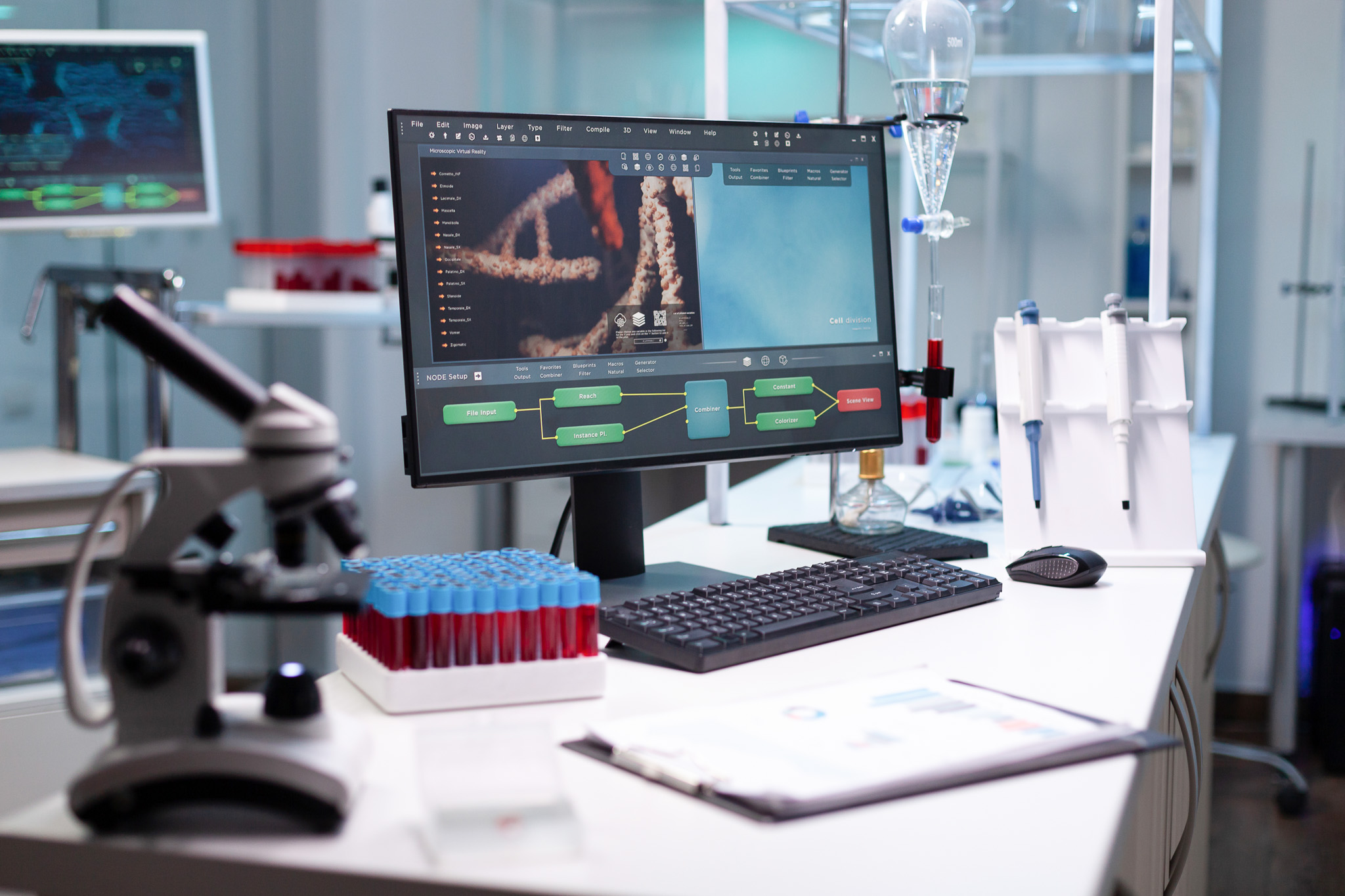
In a 3-part automated hematology analyzer, hemoglobin (HGB) is the one Complete Blood Count parameter measured optically rather than by electrical impedance: a stable LED illuminates a lysed whole-blood sample in a cuvette, and a photodiode behind it measures the transmitted light so the instrument can compute absorbance and report HGB concentration in g/dL. Opto Diode, a division of ITW, manufactures silicon photodiodes, photodiode-preamplifier modules, and visible LEDs suited to that optical channel at its Camarillo, California facility.
How a 3-Part CBC Analyzer Divides Its Work
Three-part hematology analyzers count white blood cells, red blood cells, and platelets by electrical impedance. Hemoglobin is measured differently, on a dedicated optical channel. A reagent lyses the sample in the cuvette to produce a colored reaction; a stable LED source illuminates that reaction chamber, and a silicon photodiode positioned behind the cuvette measures the light that gets through. Absorbance is computed as A = log(I0/I), where I0 is the reference (blank) light level and I is the light level measured through the reacted sample — and that absorbance value converts directly to HGB concentration in g/dL.
Anatomy of the HGB Optical Path
| Stage | Function | Typical implementation |
|---|---|---|
| Source | Illuminates the lysed sample | LED in a hermetic TO-can package, wavelength matched to the reagent chemistry |
| Sample | Reaction chamber | Cuvette or flow cuvette containing lysed whole blood plus reagent |
| Detector | Measures transmitted light | Blue-enhanced silicon photodiode, typically paired with a transimpedance amplifier |
| Output | Signal conditioning | Conditioned voltage → ADC → HGB concentration in g/dL |
Per the application note, most HGB reagent chemistries absorb in the 540–580 nm range, and the note identifies blue-enhanced silicon detectors as well matched to that band. Opto Diode specifies the responsivity of its blue-enhanced parts at 450 nm (0.28 A/W typical, 0.2 A/W minimum) rather than at 632 nm, where its red-enhanced line is characterised. LED source wavelength is chosen to match whichever reagent chemistry the analyzer uses.
Photodiode-Preamplifier Modules for the HGB Receiver
For instrument designers who want to avoid laying out a discrete transimpedance front end, Opto Diode’s ODA-6WB-500M and ODA-6WB-100M integrate a blue/green-enhanced silicon photodiode and a preamplifier in a single hermetically sealed TO-39 package, each with a 5.87 mm² active area (3.30 mm × 1.78 mm). The suffix is the transimpedance gain: the datasheets specify 500 MΩ for the ODA-6WB-500M and 100 MΩ for the ODA-6WB-100M, with custom gains available. That gain sets the trade-off. Per the datasheets the 500M gives 100 V/µW typical sensitivity at 450 nm (85 V/µW minimum) with a −3 dB frequency response of 130 Hz typical; the 100M gives 20 V/µW typical (17 V/µW minimum) with a −3 dB frequency response of 1000 Hz typical. For a colorimetric absorbance measurement — a comparatively slow, DC-to-low-frequency signal — the higher-gain module is generally the better starting point; the faster, lower-gain part is worth evaluating where the optical channel also needs to track transients.
Integrating the photodiode and amplifier in one hermetic package keeps a low-level, layout-sensitive analog signal off the board — the reason the application note calls out this pairing for sub-microwatt absorbance signals.
Discrete Blue-Enhanced Photodiodes
Where a design calls for a discrete detector instead of an integrated module — a custom transimpedance stage, a different footprint, or a different active area — Opto Diode’s blue-enhanced silicon photodiode line spans five active areas:
| Part number | Model | Package | Active area |
|---|---|---|---|
| ODD-1WB | ODD-450-007 | TO-18 hermetic | 1 mm² |
| ODD-5WB | ODD-450-002 | TO-5 hermetic | 5 mm² |
| ODD-12WB | ODD-450-004 | TO-8 hermetic | 12 mm² |
| ODD-15WB | ODD-450-005 | TO-5 hermetic | 15.8 mm² |
| ODD-42WB | ODD-450-006 | TO-8 hermetic | 42 mm² |
Package follows die size loosely rather than strictly: the 1 mm² part sits in a TO-18, the 5 mm² and 15.8 mm² parts in TO-5 cans, and the 12 mm² and 42 mm² parts in TO-8 cans — so around 12–16 mm² footprint, not area alone, decides the can. All five datasheets specify a hermetic package, which matters for the stable response and repeatable calibration a clinical instrument depends on over months of service.
LED Source Options
Opto Diode’s high-output visible LED line includes two hermetic TO-39 parts that suit an HGB source or a reference channel, depending on the reagent chemistry and system design: the OD-469L, a high-output blue LED with a dominant emission wavelength of 470 nm typical (465–475 nm), and the OD-624L, a high-output red LED with a dominant wavelength of 624 nm typical and a 635 nm peak. Both are narrow-beam parts — 7° half-intensity beam angle — in hermetic packages built for stable optical output. Neither sits inside the 540–580 nm band the application note gives as typical for HGB chemistries, which is why the note positions them as a potential source or reference channel rather than a drop-in HGB source.
Custom & OEM Support
Opto Diode also builds custom photodiodes, LEDs, and value-added optoelectronic assemblies for OEM analyzer platforms — sample monitoring, calibration channels, and other biomedical sensing systems where a catalog part doesn’t fit. Design, wafer fabrication, assembly, and test happen at the single Camarillo, California facility, which is ISO 9001:2015 certified and ITAR registered — US-based design, manufacturing, and technical support.
Talk to an applications engineer
Send your reagent absorption band, required signal level, response-time budget, and package constraints. Our applications engineers will tell you which standard photodiode, preamplifier module, or LED fits — or what a custom detector or assembly would take. Standard response to an online request is within 1–2 business days; direct orders must meet a $3,000 minimum.
Frequently Asked Questions
How is hemoglobin measured in a 3-part hematology analyzer?
+
Hemoglobin is measured on a dedicated optical channel, separate from the electrical-impedance counting used for WBC, RBC, and platelets. A reagent lyses the sample to produce a colored reaction; an LED illuminates the reaction in a cuvette, and a photodiode behind it measures the transmitted light. Absorbance is computed as A = log(I0/I) and converted to HGB concentration in g/dL.
Why are blue-enhanced photodiodes used for HGB detection?
+
Most HGB reagent chemistries absorb in the 540–580 nm range, per Opto Diode’s application note. Opto Diode specifies the responsivity of its blue-enhanced photodiodes at 450 nm (0.28 A/W typical) rather than at 632 nm, where its red-enhanced line is characterised. Opto Diode’s blue-enhanced photodiodes for this channel include the ODD-1WB, ODD-5WB, ODD-12WB, ODD-15WB, and ODD-42WB, spanning 1 to 42 mm² of active area in hermetic TO-can packages.
What’s the difference between the ODA-6WB-500M and ODA-6WB-100M preamplifier modules?
+
Both integrate a blue/green-enhanced silicon photodiode and a transimpedance preamplifier in a single hermetic TO-39 package with a 5.87 mm² active area. They differ in transimpedance gain: 500 MΩ for the ODA-6WB-500M and 100 MΩ for the ODA-6WB-100M. Per their datasheets the 500M gives 100 V/µW typical sensitivity at 450 nm with a −3 dB frequency response of 130 Hz typical, while the 100M gives 20 V/µW typical with a −3 dB frequency response of 1000 Hz typical. The higher-gain module suits the comparatively slow HGB absorbance signal; the faster part is a better fit where the channel must also track optical transients. Custom gains are available.
Does Opto Diode offer custom optical components for hematology or other biomedical instruments?
+
Yes. Opto Diode builds custom photodiodes, LEDs, and value-added optoelectronic assemblies for OEM analyzer platforms, sample monitoring, and calibration channels, in addition to its standard catalog parts. Design, wafer fabrication, assembly, and test are all done at its Camarillo, California facility, which is ISO 9001:2015 certified and ITAR registered. Standard response to an online quote request is within 1–2 business days.
Related
Reviewed and updated August 2026.
Get a Quotation Now
For any queries, please complete the form and we
will contact you within 48 hours